Cat food safety · Updated
Can cats eat eggs?
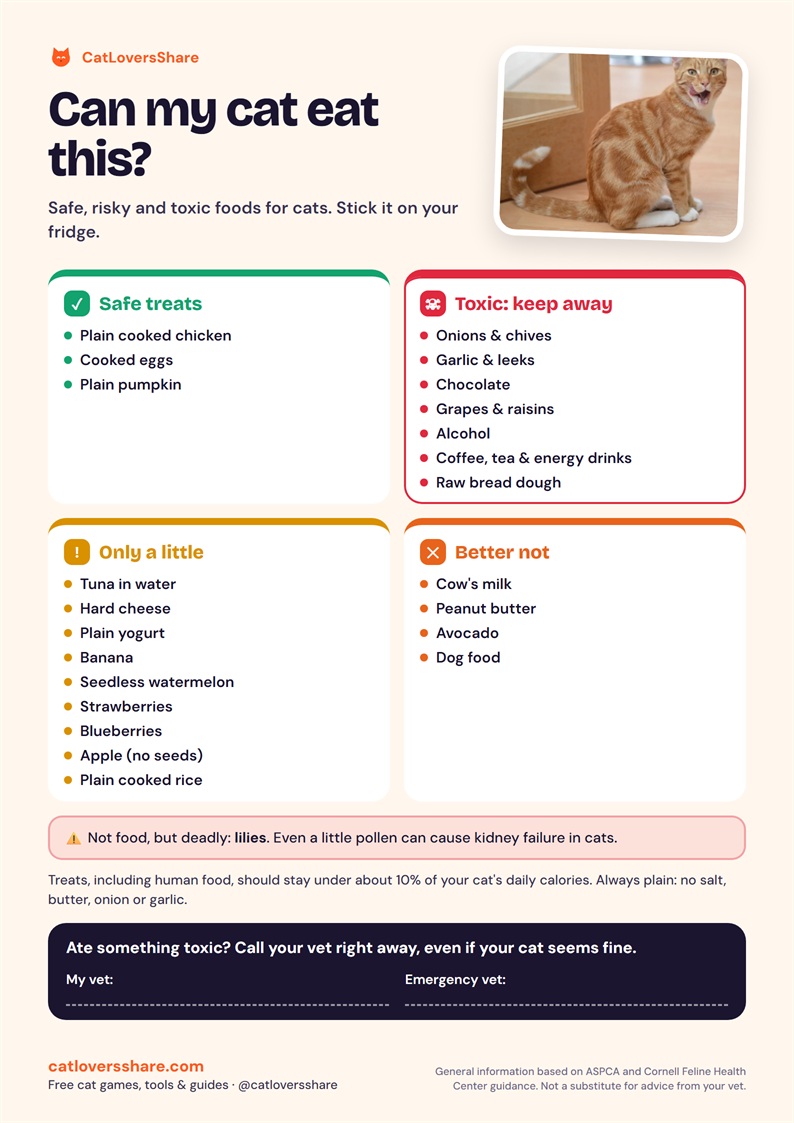
Quick answer: Yes, cats can eat fully cooked eggs. Scrambled or hard-boiled egg with nothing added is a protein-rich treat. Raw eggs are a no.

Are eggs good for cats?
Eggs are packed with protein and amino acids that cats need, and they're easy to digest when cooked.
Many cat foods already include egg as an ingredient.
How to give eggs to your cat safely
- Cook the egg completely: scrambled or hard-boiled.
- No salt, butter, oil, milk, cheese, onion or chives.
- Offer a spoonful or a few small pieces, not a whole egg.
The 10% rule: treats, including any human food, should make up no more than about 10% of your cat's daily calories. Not sure how much your cat needs? Try our cat food calculator.
Risks to watch for
- Raw eggs can carry Salmonella and E. coli.
- Raw egg whites contain avidin, which can block the absorption of biotin, a B vitamin.
- Eggs are high in calories for a small cat. Keep portions tiny.
My cat ate eggs. What should I do?
If your cat licked some raw egg, watch for vomiting or diarrhea over the next day or two and call your vet if it happens.
Questions people ask
Can cats eat eggs?
Yes, cats can eat fully cooked eggs. Scrambled or hard-boiled egg with nothing added is a protein-rich treat. Raw eggs are a no.
Can cats eat egg yolk?
Cooked yolk is fine in small amounts. It's rich in fat, so keep it as an occasional treat.
Can cats eat eggshells?
It's not recommended. Shells can carry bacteria and the sharp pieces aren't needed in a complete cat diet.
Sources: ASPCA Animal Poison Control and the Cornell Feline Health Center. This page is general information, not a substitute for advice from your own vet.