Cat food safety · Updated
Can cats eat cheese?
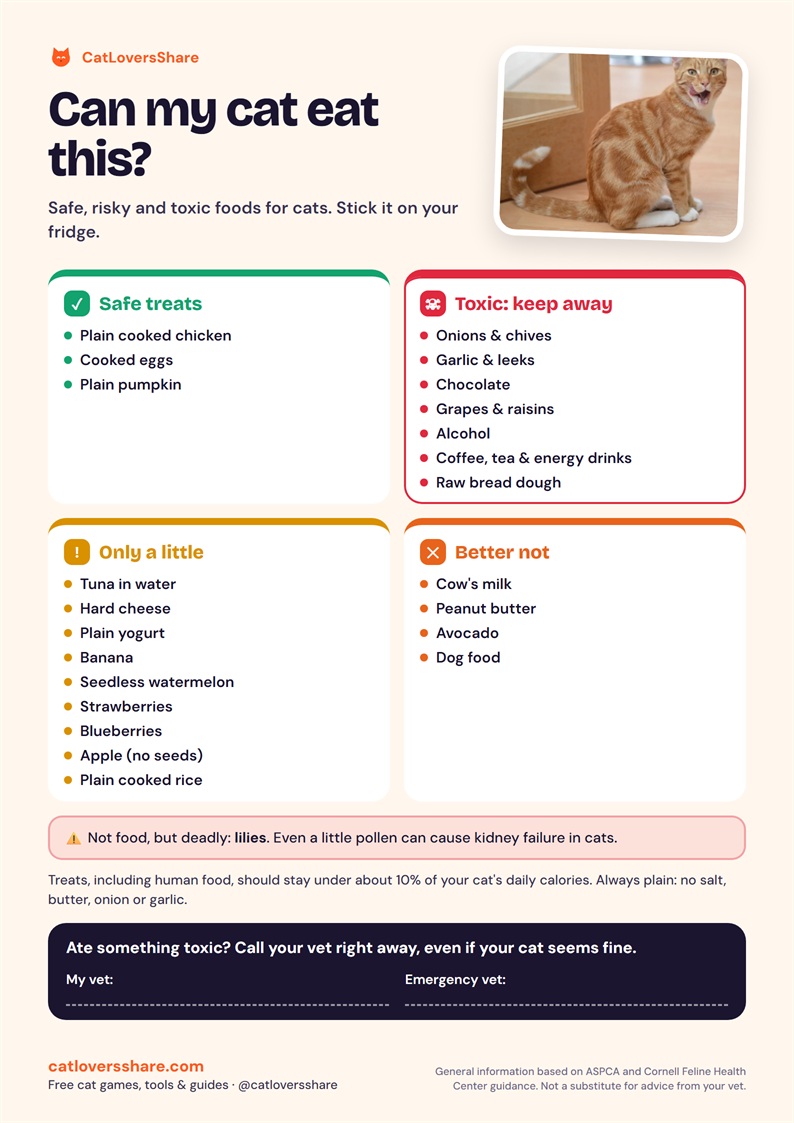
Quick answer: Only a tiny bit. Cheese isn't toxic, but many adult cats are lactose intolerant and cheese is high in fat and salt. A pea-sized piece now and then is the limit.
Is cheese good for cats?
Most cats lose much of their ability to digest lactose after kittenhood.
Hard, aged cheeses have less lactose than soft ones, so a small piece is less likely to cause trouble.
How to give cheese to your cat safely
- Pick a hard, plain cheese like cheddar.
- Offer a pea-sized piece. It can be handy for hiding a pill.
- Skip it entirely if your cat gets diarrhea or gas afterwards.
The 10% rule: treats, including any human food, should make up no more than about 10% of your cat's daily calories. Not sure how much your cat needs? Try our cat food calculator.
Risks to watch for
- Diarrhea, vomiting and gas in lactose-intolerant cats.
- High fat and salt for a small body.
- Blue cheeses and cheeses flavored with garlic, onion or chives should be avoided.
My cat ate cheese. What should I do?
A little plain cheese usually just means a possible upset tummy. If it was flavored with garlic or onion, call your vet.
Questions people ask
Can cats eat cheese?
Only a tiny bit. Cheese isn't toxic, but many adult cats are lactose intolerant and cheese is high in fat and salt. A pea-sized piece now and then is the limit.
Can cats eat cream cheese?
A tiny lick is unlikely to hurt, but it's high in fat. It's not a good regular treat.
Can cheese help give my cat a pill?
A small piece can work for some cats. Pill pockets made for cats are a better everyday option.
Sources: ASPCA Animal Poison Control and the Cornell Feline Health Center. This page is general information, not a substitute for advice from your own vet.