Cat food safety · Updated
Can cats eat milk?
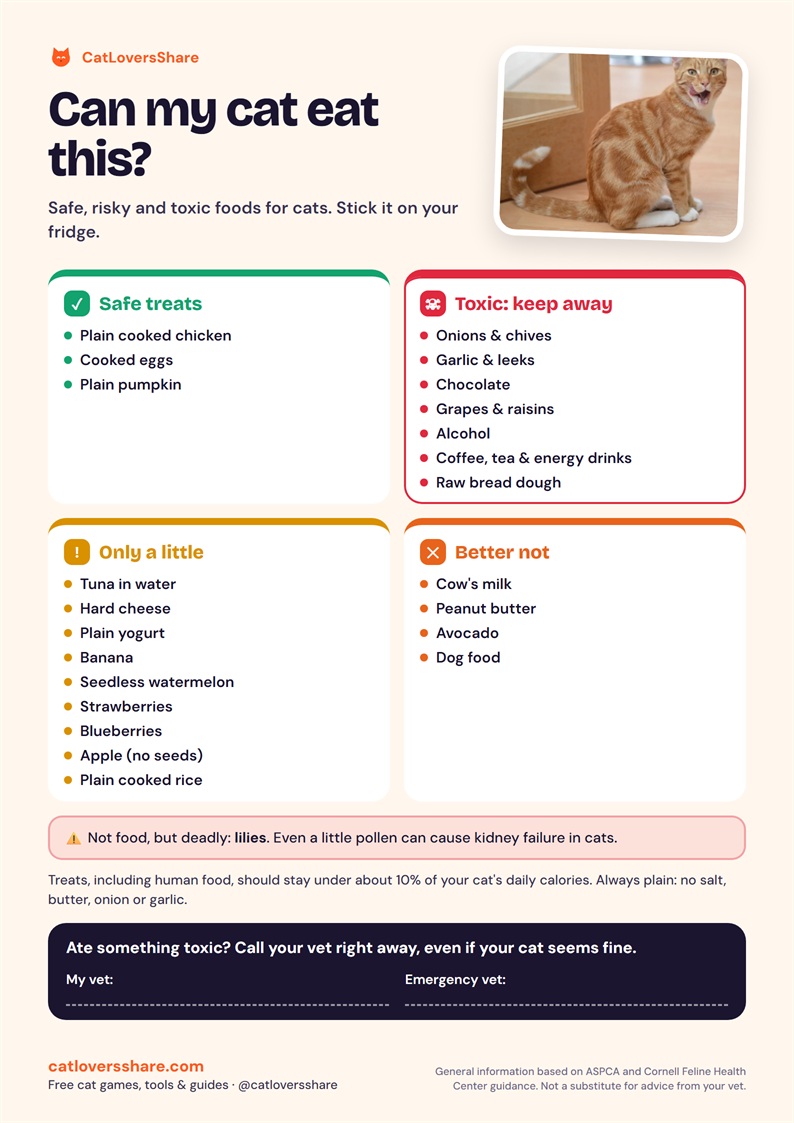
Quick answer: Better not. Despite the classic image, most adult cats are lactose intolerant, and cow's milk often causes diarrhea, gas and tummy pain. Fresh water is what cats need.
Why milk is bad for cats
Kittens make the enzyme to digest their mother's milk, but most cats make much less of it once they're weaned.
Milk also adds calories and fat a cat doesn't need.
Risks to watch for
- Diarrhea, vomiting, gas and stomach discomfort.
- Cow's milk is not a replacement for kitten formula: orphaned kittens need a kitten milk replacer.
- Lactose-free “cat milk” products exist, but they're treats, not a need.
My cat ate milk. What should I do?
If your cat drank some milk, watch for diarrhea or vomiting over the next day. Make sure they have fresh water, and call your vet if symptoms continue.
Questions people ask
Can cats eat milk?
Better not. Despite the classic image, most adult cats are lactose intolerant, and cow's milk often causes diarrhea, gas and tummy pain. Fresh water is what cats need.
Can kittens drink cow's milk?
No. Kittens who aren't with their mother need a kitten milk replacer from a pet store or vet.
Is lactose-free milk okay for cats?
It's gentler, but still not needed. Water is the best drink for cats.
Sources: ASPCA Animal Poison Control and the Cornell Feline Health Center. This page is general information, not a substitute for advice from your own vet.